
Song of the Day
Designing a social music app around connection rather than performance.



Executive Summary
Song of the Day is a social music diary built around a simple daily ritual: choose one song, share it with friends, and slowly create a record of what you were listening to over time.
I designed and developed the app independently, taking it from early concept through interface design, social-system decisions, backend implementation, mobile testing, and release on iOS and Android.
The central design challenge was not simply how to let people share music. It was how to encourage connection without recreating the pressure, competition, and endless engagement patterns of traditional social platforms.
The Design Question
How can a social app encourage connection without encouraging performance?
Many social products reward frequent posting, audience growth, public metrics, and continuous engagement. Those patterns can be useful for discovery, but they can also make sharing feel like a small performance.
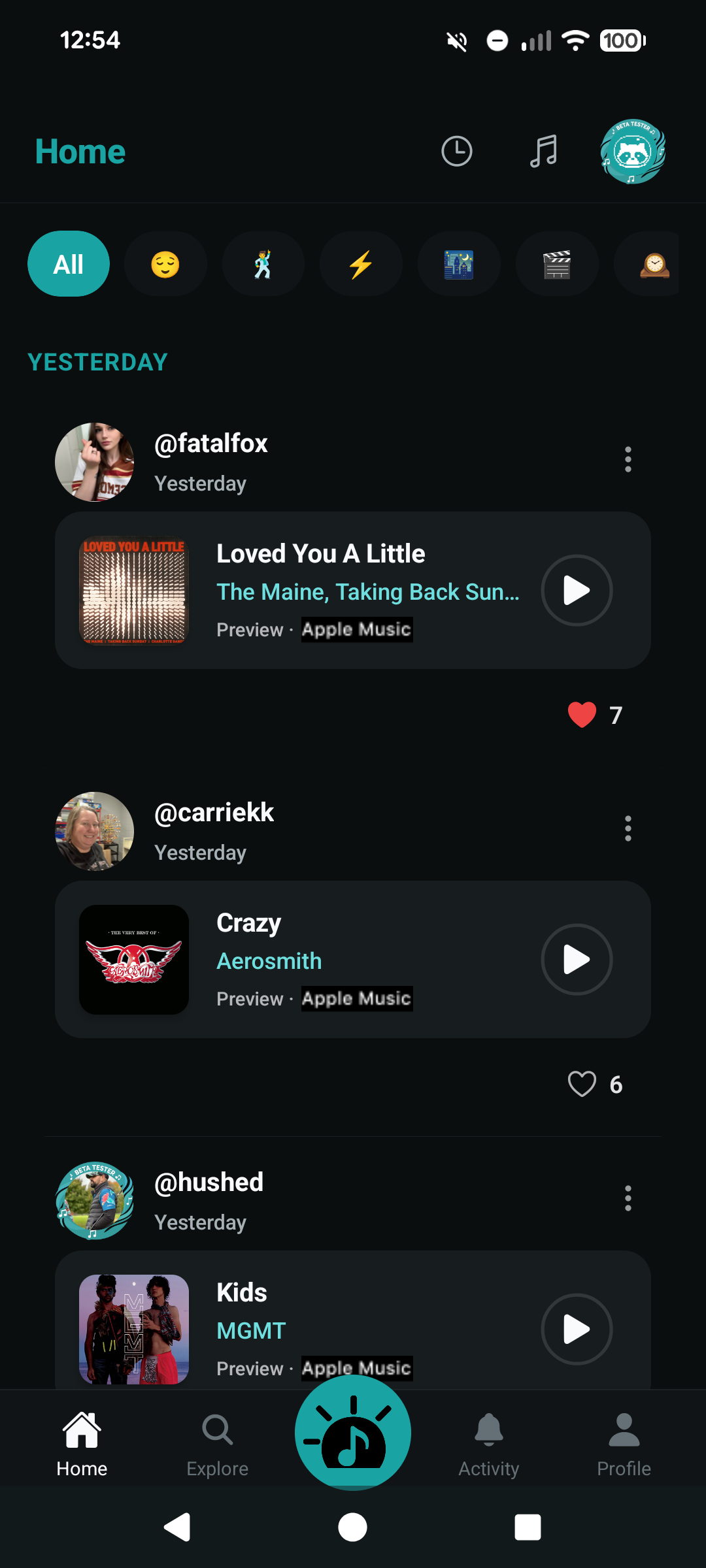
Song of the Day explores a narrower alternative: a daily ritual with a clear beginning and end. The app should let someone post, check in on friends, react lightly, and leave without feeling behind.
Screenshots
Core Design Principles
One meaningful action
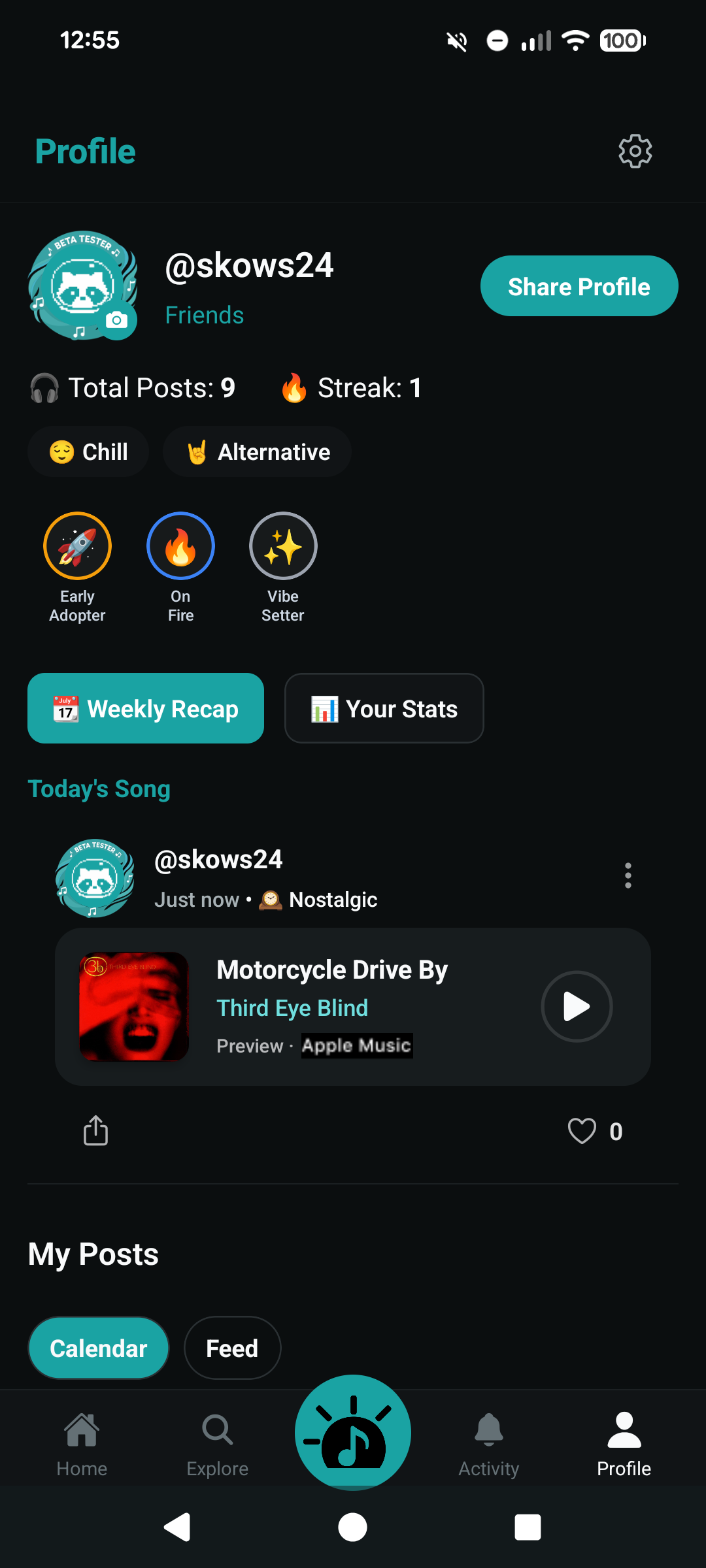
Users choose one song per day. The limitation turns posting into a small decision rather than a content-production task.
Reflection over accumulation
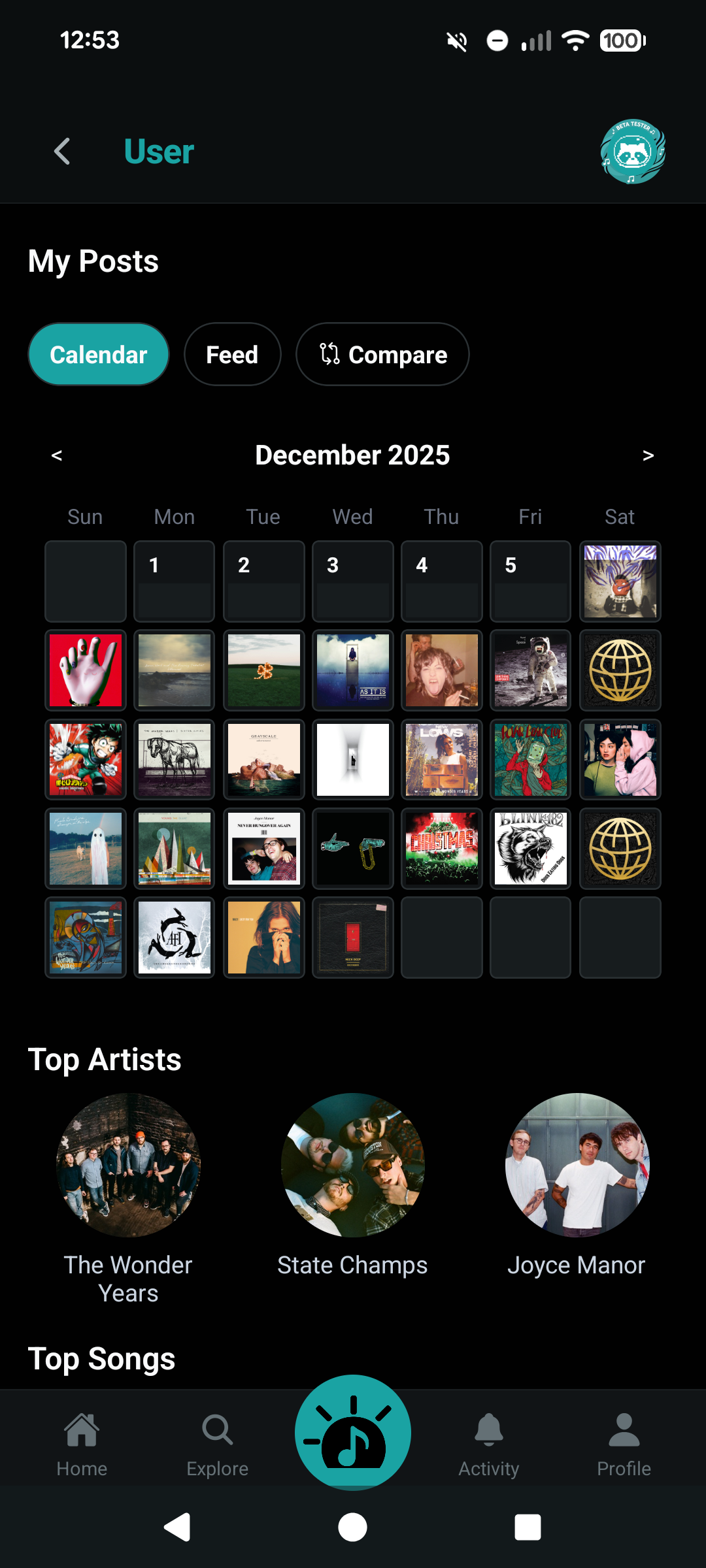
The value of a post grows over time as daily songs become a personal calendar and listening history.
Connection over audience
Social interactions should feel reciprocal and personal rather than organized around visible popularity.
A natural stopping point
The experience should let people post, check friends' songs, and leave without feeling that they failed to keep up.
Core Loop
The loop is intentionally small and repeatable. Each step supports a quick daily check-in while still building long-term personal value.
- Choose a song
- Share it
- See friends' songs
- React or listen
- Build a music history
- Return tomorrow
Key Design Decisions
Limiting posts to one song per day
The one-song constraint is the product's main design lever. It lowers posting pressure, gives each choice more meaning, and prevents the app from becoming another place to dump every track someone hears.
The tradeoff is obvious: users cannot share everything. I accepted that because the limitation is the point. Scarcity makes the daily choice easier to understand and more interesting to revisit.
Turning posts into a calendar
A feed is useful in the moment, but it loses value quickly. The calendar makes the app useful after the day has passed. Album artwork gives each month a visual texture, making memory and mood scannable.
Designing lightweight social interaction
The app uses a lightweight connection model instead of making public follower metrics the center of the experience. Reactions exist as acknowledgment, not as a high-score system.
That design keeps the focus on the song and the person who shared it. The social layer supports discovery and conversation, but the app does not need an endless feed or a visible popularity contest to work.
Music discovery without replacing streaming services
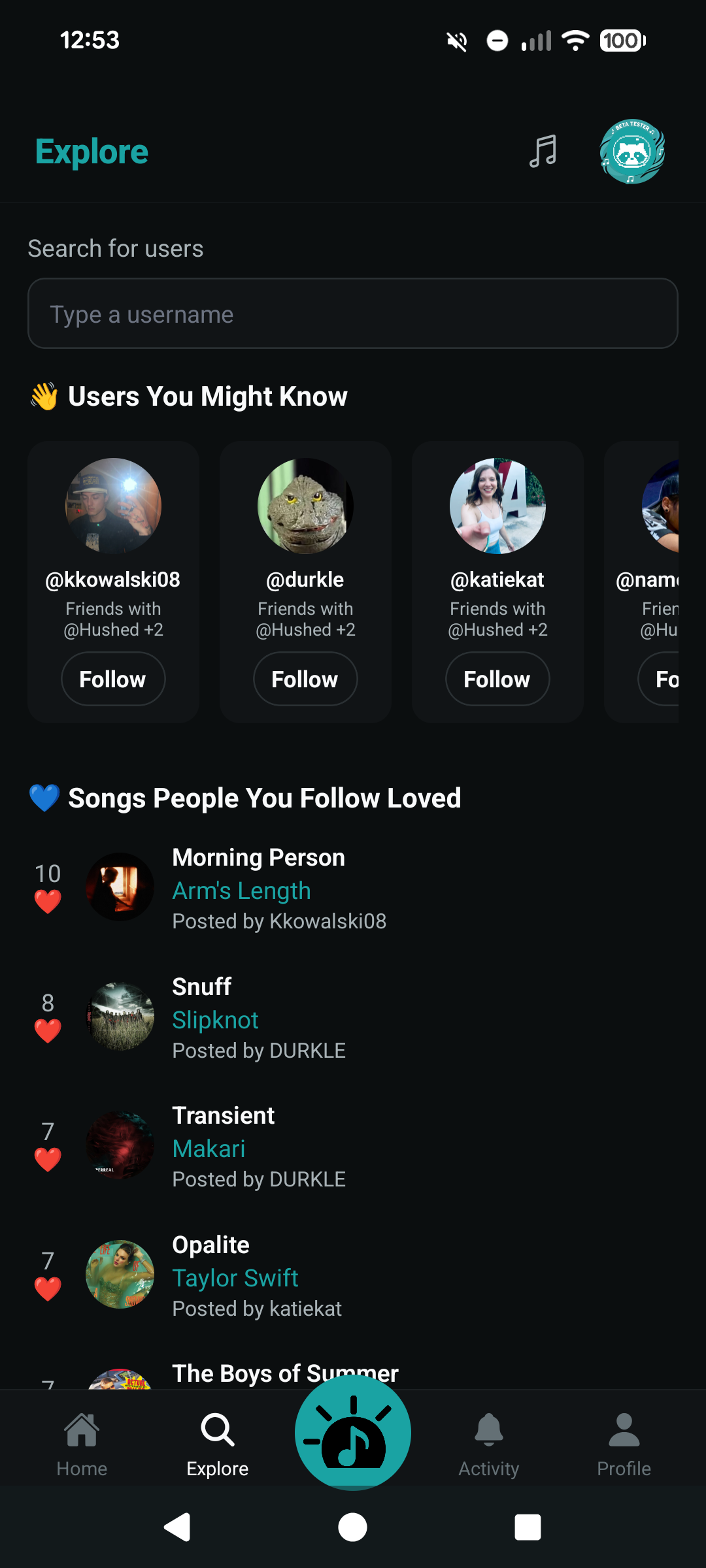
Song of the Day is not trying to become a streaming platform. Search, song metadata, previews where available, and external music links are there to help users choose and recognize songs, then continue listening in the services they already use.
Designing around privacy and account deletion
Because this is a social app, trust had to be part of the product design. The app includes account systems, scoped user data, and a product-specific data deletion flow documented on the site.
That legal and support surface is less glamorous than screenshots, but it is part of shipping a real product: users need to know what happens to their data and how to leave cleanly.
Implementation Ownership
Song of the Day was an end-to-end solo project. I handled product concept, feature definition, mobile UI implementation, Firebase data modeling, authentication, security rules, testing, release preparation, and store deployment.
- Built the app with Expo / React Native for iOS and Android.
- Used Firebase for authentication, database behavior, and backend data.
- Designed social and archive features around a daily posting constraint.
- Prepared product, privacy, terms, and data-deletion pages for release.
- Shipped the app through Google Play and the Apple App Store.
Technical Challenges
The hardest parts were not single screens; they were the connections between systems. Search, posting rules, friend/connection behavior, notifications, profiles, calendars, privacy expectations, and backend security all had to agree with the same product promise.
Early prototypes created legacy assumptions that later had to be untangled. I refactored around clearer data models and more predictable behavior so the app could be easier to maintain after launch.
What I Learned
Shipping Song of the Day changed the design questions. Once an app is public, polish is not just visual. It includes onboarding, store copy, privacy language, edge cases, error handling, and whether the core loop still feels understandable when someone uses it without explanation.
The project also clarified what I enjoy most: designing constraints that shape behavior, then building enough of the product myself to see whether those ideas survive real use.
Project Status
Song of the Day is shipped and available now on iOS and Android. I continue to treat it as an active product and a flagship example of my product design, mobile UX, social systems, and implementation work.
Want to talk product design or mobile UX?
I am interested in social systems, calm product design, mobile UX, and projects where constraints shape behavior in useful ways.